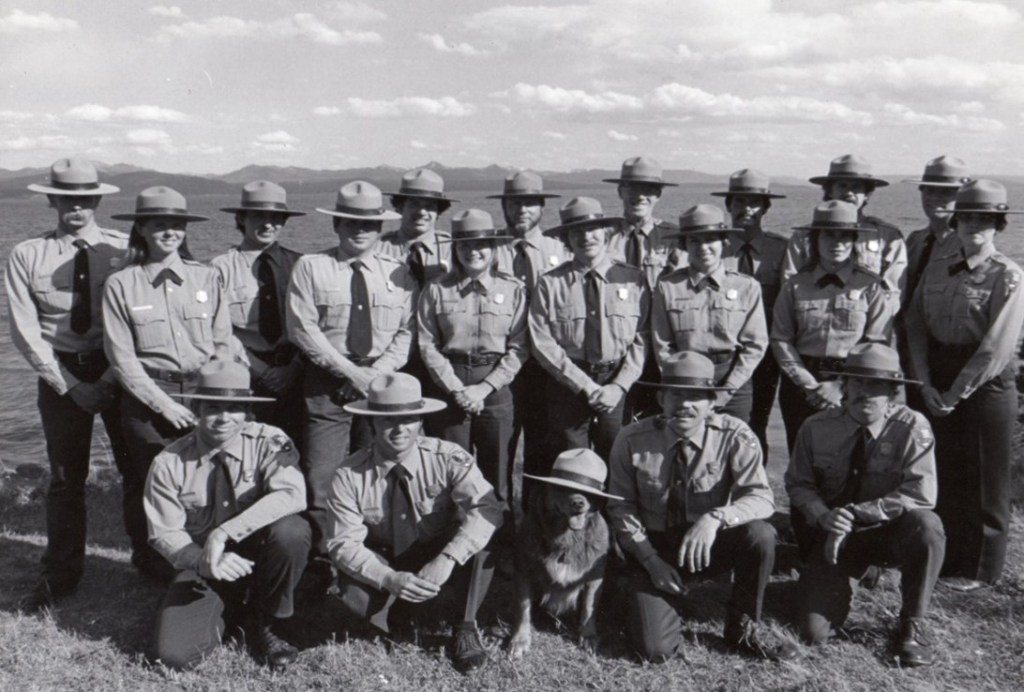
Law Enforcement in our National Parks looks a lot different today than it did when I first reported for duty at Lake Ranger Station in 1978.
Today’s Law Enforcement Ranger must possess skills related to investigating crimes of violence, major property crimes, fraud, embezzlement, major resource violations and drug cultivation.
Other calls can range from responding to traffic crashes, clearing up a “bear jam” that has traffic backed up for miles and visitors chasing bears and bison with their cameras, to campground mishaps.
Violence and abuse directed against park rangers is becoming more common. Rangers have cited a number of factors for assaults or threats, including conflicts over federal land-management policies, growing use of public lands for meth labs and marijuana plantations, and deeper penetration of remote backcountry areas by off-road vehicles.
One of the greatest challenges, however, faced by Yellowstone and other parks is under funding of national parks. But it’s a problem at least partially offset by the wealth of talented and dedicated rangers who work for the park service.
Next time you visit a National Park and see a park ranger, please be sure to thank
them for their service in protecting our national parks. I know it will be much
appreciated.
 A Ranger's Journal