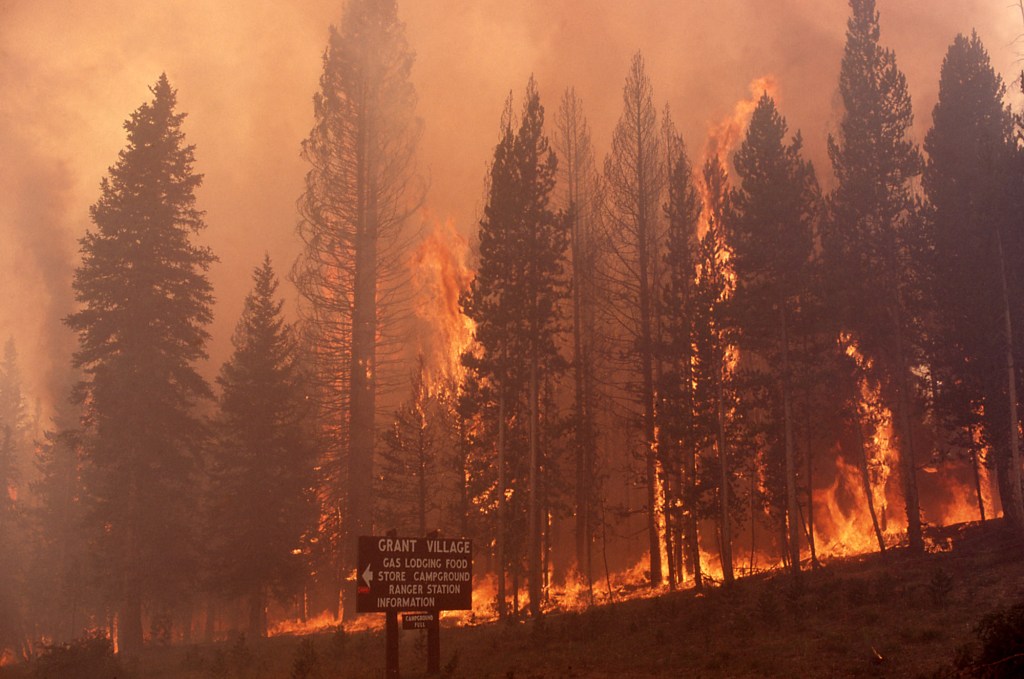
One of my most memorable seasons in Yellowstone was in 1988.
The fires of ’88 burned 1.4 million acres in the Greater Yellowstone Ecosystem and 36% (793,880 acres) of Yellowstone National Park. These fires were the result of environmental and human factors.
Yellowstone usually experiences afternoon showers three or four days each week during the summer, but in 1988 no measurable rain fell for almost three months.
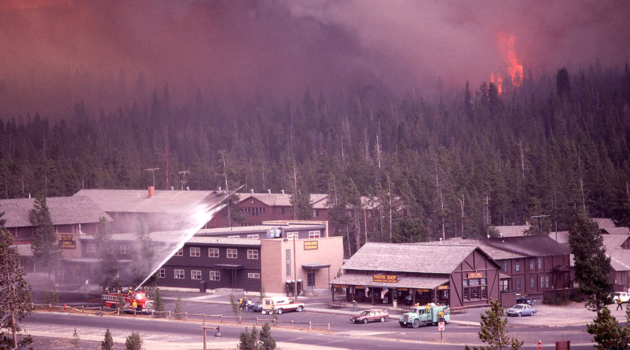
By the end of July, a combination of dry tinder, lightning, high winds, and the human effects of outfitters and woodcutters had caused a series of separate fires to join and burn out of control.
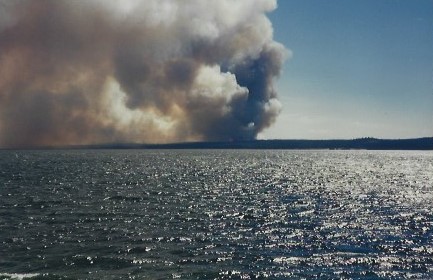
There were days in the Lake Village Area when you could see fire storm clouds in every direction you looked. These pyro cumulonimbus clouds—which NASA has called the “fire-breathing dragon of clouds” for the thunderbolts they hurl at Earth.
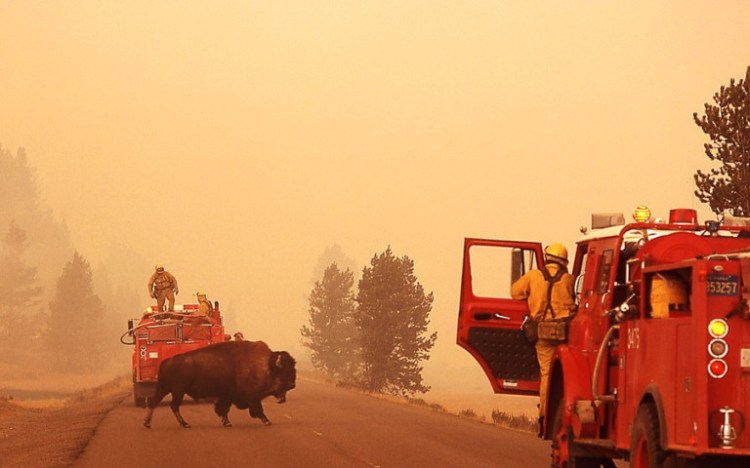
We tried our best to keep the park open, but it got to a point when there had to be intermittent road closures to keep visitors safe and allow firefighters to get through.

As a law enforcement ranger, I escorted media and visitors, closed roads, and manned barricades when the fire made a run at Canyon Village, sending flames roaring 200 feet high.
One of my assignments was to brief inmate firefighters on bear safety in the backcountry. Talk about deer in headlights after hearing what could happen if they didn’t heed my bear warning.
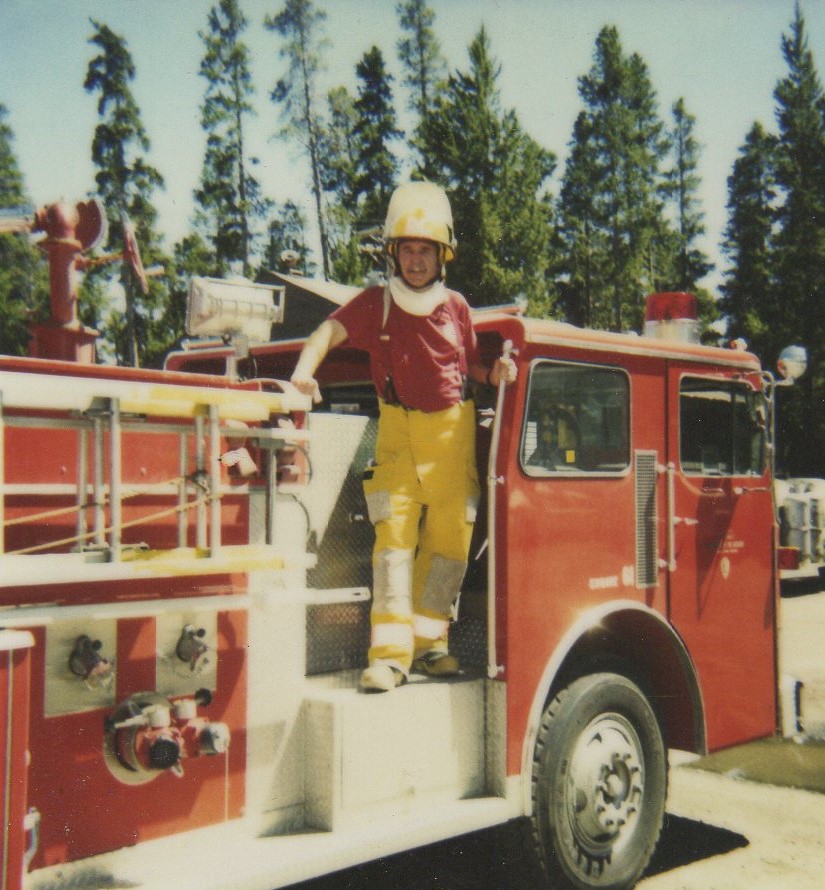
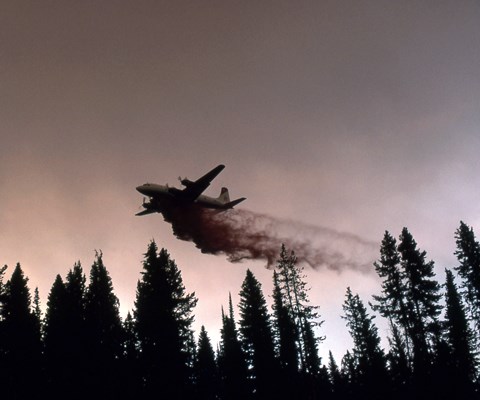
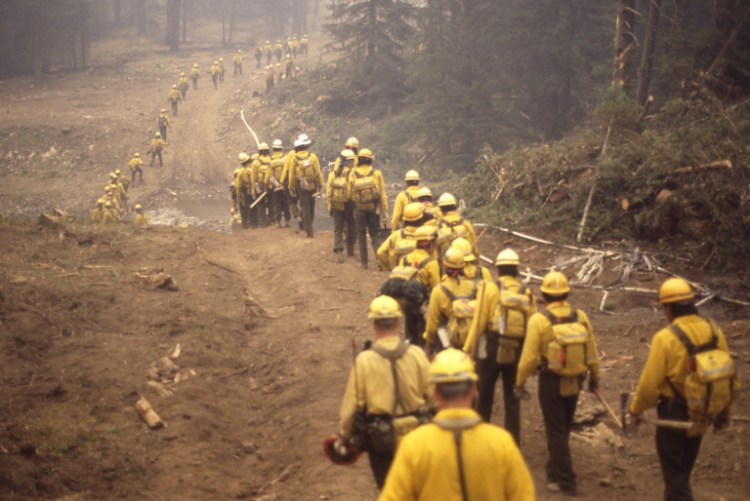
At the peak of firefighting efforts, 9,500 military and civilian firefighters were engaged, using dozens of helicopters and more than 100 fire trucks to try to stop the blazes.
Despite the largest fire-fighting effort at that time in the history of the nation, weather finally contained the fires when snow fell in September.
– James A. Pritchard – “Preserving Yellowstone’s Natural Conditions: Science and the Perception of Nature”
“The dramatic fires of 1988 provided an opportunity for the American public to learn about and think about the park in ecological ways, but media coverage depicting the “destruction” of forest areas did public understanding a disservice, only rectified in the years following the fires when tourists witnessed the regeneration for themselves.”
 A Ranger's Journal